
A company's productivity is defined as the efficiency with which it transforms resources into results, and the major differences between companies arise from how they manage and optimize these resources. In today's digital environment, there are several factors that determine productivity, and digital technology plays an essential role in this regard:
Massive Differences in Productivity
Studies show that, in industry, there are huge productivity gaps between companies in the top 10% of performers and those at the bottom of the spectrum. For example, some factories produce twice as much with the same resources compared to others.
There are two main forms of productivity:
- Labor productivity: output per unit of labor force.
- Total Factor Productivity (TFP): reflects the global efficiency of a business, utilizing all resources (capital, labor, raw materials). The general formula for TFP is:
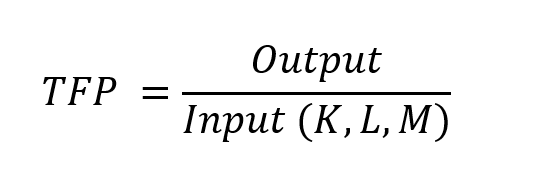
where:
- K is capital (assets, infrastructure),
- L is labor force,
- M represents materials and resources used.
Practical example: A company that produces 1,000 units using 10 employees has a labor productivity of 100 units/employee.
How To Calculate Productivity: Practical Steps
To calculate the productivity of a business or a specific department, follow these steps:
- Establish the output: This can be measured based on the volume of products made, services delivered, or revenue generated.
- Measure the inputs: These include the number of employees, hours worked, capital invested, and raw materials used. It is important to track all resources used to obtain that specific output.
- Output/Input Ratio: The basic productivity formula is:

- Calculation of Total Factor Productivity (TFP): This is a more advanced measure that takes into account all factors involved in production. TFP provides a clearer picture of overall business performance.
Productivity Analysis: How To Identify Areas for Improvement
Once productivity is calculated, the next step is to analyze it to understand where optimizations can be made. Here are some indicators you should track:
- Long-term trends: Track the evolution of productivity over time to identify if your business is becoming more efficient or if there are declines that require attention.
- Benchmarking against industry standards: It is essential to compare your business's productivity with industry averages to see if you are competitive or falling behind.
- Identifying losses: In many cases, a decrease in productivity can be caused by operational losses, such as equipment inefficiency, task mismatch between teams, or poor time management.
The essential question for entrepreneurs: What makes some businesses much more productive than others, even if they use the same resources?
1. Automation and Operational Efficiency
Digital technologies significantly reduce the time required for administrative and production processes through automation. By eliminating human error and optimizing workflow, companies can focus their resources on value-added activities, such as product innovation or service improvement.
Automation reduces data processing time and allows for instantaneous synchronization between teams.
2. Access to Data and Advanced Analysis
Digital technologies enable real-time data collection and analysis. Data provides precise perspectives on business performance, allowing for informed decision-making. Companies can analyze consumer behavior, product performance, or supply chain efficiency. Access to accurate data increases the ability of firms to respond quickly to market changes and adjust operational and marketing strategies.
3. Data Integration and Efficient Collaboration
Digital technologies integrate all data flows into a single platform, providing transparency and a holistic view of a company's operations. Integration eliminates fragmentation and redundancies within the organization, increasing operational efficiency. All departments have access to the same data, facilitating collaboration between teams.
This integration allows teams to collaborate in real-time, eliminating information barriers and allowing for a more efficient and well-coordinated workflow.